
PR Without the Panic
How to Get Media Coverage

By Linley McConnell
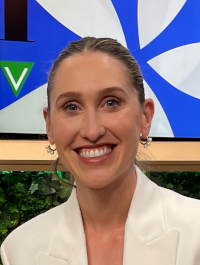
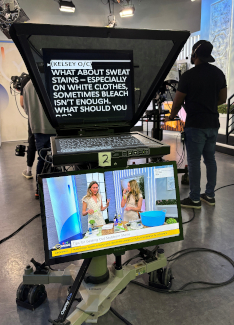
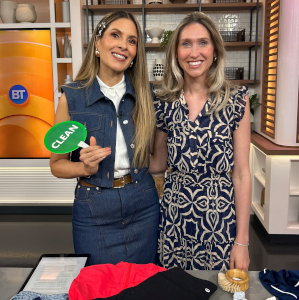
If you had told me a few years ago that I would regularly be invited onto national television to talk about ‘laundry,’ I would have been skeptical. Like many dry cleaners, I assumed media coverage was reserved for big brands, famous founders, or companies with expensive PR teams. And yet, today, “Laundry with Linley” (me) has become a regular on Canadian TV, averaging at least one national television segment per month!
This month, I aim to demystify public relations and demonstrate how to build a media list and pitch your business in a way that feels manageable, repeatable, and realistic for your dry cleaning business.
What is PR?

To me, public relations has always been an elusive term, but at its core, it is simply storytelling. Reporters and producers are not looking to promote your business, but instead want helpful, timely, and engaging content for their audience. After all, they’re
running a business, so their focus is to keep eyeballs looking at the screen or reading the paper. Therefore, your job isn’t to sell dry cleaning, it’s to offer your expertise and education.
Fabricare experts have more media-worthy knowledge than they realize. We understand fabric care, seasonal wardrobe shifts, stains, sustainability, uniforms, weddings, winter wear, and everyday clothing mistakes people make. They may sound like ‘niche’ topics, but in fact, they are universal.
Step One: Build a simple media list

A media list is what it sounds like, a list of media (TV, print, radio, podcast hosts) with contact names and mails. Start with the most local outlets and then expand your horizons.
Community or neighborhood-specific print outlets are much more open to giving newcomers a chance. Morning radio or television shows, lifestyle segments, radio programs, community newspapers, and city magazines are often the most receptive to expert contributors, once you have one or two appearances or references under your belt.
Here’s a simple way to build your list:
- Use Google or ChatGPT to ask about the local outlets in your geographic region.
- Visit the outlet’s website and look for links to Contact, Editorial, or Submit a Story.
- Look specifically for producers, assignment editors, or lifestyle reporters.
- Capture the following in a spreadsheet:
- Media outlet name
- Reporter or producer name
- Email address
- Type of content they cover
Aim for ten to fifteen contacts to start. That is more than enough.
Step Two: Choose one clear story idea
No need to pitch too much. An idea for a story should focus on one clear, audience- friendly idea. Instead of “We are a dry cleaner and can talk about everything we do,” try “Why most people are ruining their winter coats at home” or “The biggest laundry mistakes people make with activewear.”
You’ll need a strong email subject line (after all, producers get hundreds of pitches per day), so again, use Chat GPT as a way to build a hook. A question or statistic is a great place to start. Another way to align on pitches is to brainstorm with your team about what makes your business unique. For example, do you clean a lot of wedding gowns, flags, veterans’ uniforms? How can an item be turned into a media moment?
Step Three: Write a short, friendly pitch email
A pitch does not need to be long or clever. It needs to be clear and add value. For example:
Subject line: The Laundry Mistakes Your Viewers Are Making & How to Fix Them!
Email body:
Hi [Name],
I own/work at [Company Name], a dry cleaning business in [City]. I wanted to share a simple story idea that could be helpful for your audience.
With [season or trend], many people are struggling with [specific problem]. As a garment care professional, I regularly see [common mistake], and I’d love to share practical tips on how viewers can protect their clothes at home. Let’s eliminate those headaches!
I’d love to share easy and DIY methods to resolve these issues to make your viewers’ lives easier.
Warmly,
[Your Name]
[Business Name]
[Phone number]
[Email address]
This format is very similar to what I use.
Step Four: Remember that silence is normal
Most pitches will not get a response. That does not mean they were bad. Producers receive hundreds of emails a week. I have landed segments after following up once or twice. I have also been booked months later when a producer remembered my name and expertise. PR is about consistency, not perfection. If you pitch once a month, your confidence will grow quickly.
[Editor’s Note: I regularly come across story ideas, but slot them into folders for the month(s) for which they would be most appropriate. I don’t go back to that folder until I’m ready to produce material for that theme. This is normal media practice, so don’t be discouraged.]
Why does it matter?
Media coverage builds trust in a way advertising cannot. When a reporter introduces you as an expert, your business gains instant credibility. Clients feel reassured. Staff feel proud. Your brand feels bigger than its footprint.
You do not need to be polished or loud. You simply need to be helpful and willing to share what you already know. If a dry cleaner can become “the laundry expert” on national television, there is room for many more voices from our industry. Start small. Start local. Start now.
Related Posts


About The Author

Linley McConnell
Linley McConnell is the sales and marketing manager of Gibson's Cleaners in Toronto. She can be reached at linleym@gibsonscleaners.com. She writes on industry issues from a Third Generation perspective.