
Chemistry: Small Cost with Outsized Impact
How laundry chemistry quietly controls cost, quality, and efficiency

By Becca Anderson
Chances are, unless you need to order supplies, you didn’t arrive at work today thinking about the chemistry behind your machines or the outcomes they produce. You’re focused on how much work needs to be done — and the best way to get from dirty to clean. But chemistry is at the heart of everything you do, and it can have a substantial impact on both your costs and your overall quality of work.
I asked Steve Tinker, Senior Vice President of Research & Development, Marketing at Gurtler Industries, to break down the ways chemistry can dictate your overall success.
What do operators most commonly underestimate about the role chemistry plays in their results?

“Chemistry typically only represents a small portion, about 3 to 5 per cent, of the operational costs of commercial or institutional laundries,” Steve explained. “Energy, water and sewer, textiles, labor and capital equipment costs make up the bulk of the budget in a laundry. The relatively small expenditure on chemicals can have a very large impact on the other major costs associated with laundry operations.
“A poorly designed wash formula, with inadequate chemical action may require additional energy (higher wash temperatures), additional water, (extra rinses), or additional labor, machine and textile wear and tear (extended wash times). A well-designed wash formula matches the chemistry needed to help achieve the lowest overall cost for all the operational factors with the highest possible quality.”
If there’s one thing you’d like operators to rethink about laundry chemistry, what would it be?
“Laundry chemicals are a small part of your operating cost profile, but the right chemical mix with the right wash formulas can help keep costs of energy, water and sewer, labor and more in control.”
How do detergents, builders, bleaches, and additives work together as a system rather than as individual products?
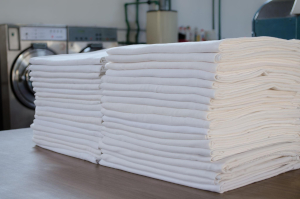
“Detergents are generally surfactants. These complex chemicals penetrate, lift and emulsify oil-based soils such as food soils, petroleum soils, fats, greases, etc. Alkaline builders work in concert with the surfactants to break down or solubilize certain soils, making it easier for the surfactants to suspend the soils. Other builders, such as water conditioners, help suspend soils and isolate water hardness so the hardness doesn’t interfere with the surfactants.
“After most of the soil is removed from the textile, there can be a residual stain remaining in the fabric, that is where bleaches come into play. Bleaches chemically break down and decolorize the remaining organic stains, allowing the last traces of soil to be removed and flushed away.
“Enzyme-based detergents/additives can be used in place of bleaches as the enzyme will also chemically break down stain agents such as protein or food-based organic stains.”
How much damage can improper chemical selection or dosing actually cause over time?
“The biggest issue with improper use is with bleaches,” he said. “Improperly injected bleaches (whether chlorine or oxygen-based) can cause major problems with textile life. Poorly rinsed chlorine bleaches can degrade cotton very quickly and reduce linen life.
“Some oxygen bleaches including peracetic acid can also cause linen damage. There are multiple formulations of peracetic acids in the market, some are better sanitizers and some are better stain removers, so it is good for the laundry to know which type you are using so you can apply the bleach at the right time in the wash formula.”
If chemistry is the strategy, dispensing is the execution.
Gurtler doesn’t just sell chemicals—you design dispensing systems. Why is dispensing as important as the chemistry itself?
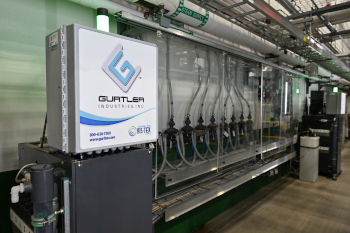
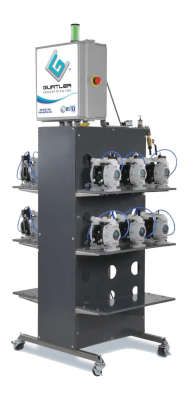
“We design and manufacture our dispensing systems and create all the software that controls the systems and records production data. Our goal is to make our equipment reliable and robust. We want to make sure that the right amount of laundry chemistry is delivered to the washers at the right time, every time.
“Our equipment for tunnels is designed to inject multiple chemicals in small doses every 60-90 seconds, day after day. And our equipment for traditional washers can inject large doses (up to multiple gallons in a 900 lb. washer) of our chemistry in mere seconds, reducing injection delay times and reducing overall wash times.
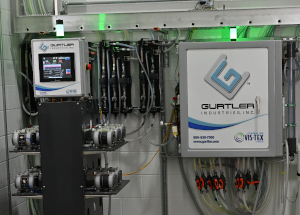
“Gurtler selects components such as pumps and valves that have a proven extended service-life and a resistance to corrosion caused by our concentrated chemicals. Our objective is to make our dispensing systems low-maintenance and as efficient as possible. This allows our service experts to spend more time evaluating efficacy and quality of the laundering process and less time checking our equipment to make sure it is running properly.”
What role should chemical suppliers play—as vendors, consultants, or long-term partners?
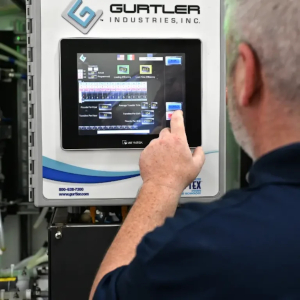
“At Gurtler, we are proud of our long-term partnerships that we have developed over our 40+ years,” Steve said. “For us communication is the key. We focus on helping line management make sure that their goals are met, while also communicating with upper management. Each time our service experts call on their customers, they review the goals of the service call with management and follow up with action steps keeping the communication flowing from month to month.
“We foster a relationship based on long-term goals. For example, perhaps management is concerned that there is too much overtime labor cost. Our service rep can suggest changes to the operation designed to reduce labor costs, such as designing wash formulas that are 10% shorter in time, allowing for a higher throughput in the wash aisle. And then, with ongoing analysis, our representative can evaluate the new wash formulas or new chemistry and measure quality and time savings, and report the findings to management over the course of months to make sure the pre-established goals are met.”
What advice would you give to a laundry operation reviewing its chemical program for the first time in years?
“When reviewing your chemical program, remember that a well-run chemical program entails more than just “chemistry.” Your chemical rep can be your outside “consultant” who analyzes your operation from soil-sort to finishing, looking for bottlenecks, inefficiency, mechanical issues, quality of the finished goods, water and energy usage and more.
“One recommendation: Ask your chemical rep: “What’s new?” There may be new products, systems, and programs that are available that may make your overall operation run smoother, improve quality, lower costs or improve your productivity. Keeping up on the latest innovations can make your job easier.”
Today’s chemistry decisions also carry environmental implications — many of which extend far beyond the wash aisle.
What advances are being made in environmentally responsible laundry chemistry?
“Most laundry chemicals are formulated with biodegradable components that can rapidly degrade in the environment,” he said. “That has been the case for many years. And the move from chlorine bleach to oxygen-based bleaches is a positive environmental step. Removing chlorine from the environment can reduce the potential chloro-compounds that have been associated with cancer risks.
“At Gurtler, environmental responsibility goes beyond formulation. Our initiatives focus on helping customers reduce their overall environmental impact by lowering water and energy use through increased water recycling and heat reclamation technologies. For example, Gurtler’s Vis-Tex Tunnel UV System treats and recycles rinse water in a tunnel washer allowing for reduced overall use of fresh water which reduces the use of energy also.”
An interface between chemistry and equipment
What trends do you see shaping the future of laundry chemistry over the next five to ten years? How is technology changing the way chemicals are formulated, dispensed, or monitored?
“We are focused on optimizing our chemistry by utilizing the most effective surfactants for lower wash temperature which will allow for reduced energy usage with no reduction in quality.
“Gurtler Industries sees an interface between chemistry and equipment. Our Introduction of our Vis-Tex Tunnel UV System combines chemistry, such as peracetic acid, with equipment that uses UV light to super-activate the oxygen bleach — making it more effective in whitening, stain removal and in reducing microbial contamination.
“Another recent innovation we developed is the Vis-Tex Tunnel Filtration System, an after-market add-on to tunnels, that removes solids from the tunnel rinse zone like lint, hair, or plastic debris that can degrade the quality of processed textiles.
“In addition, we are continually updating our production software tracking and reporting systems to make it easier to evaluate your operation.”
Final thought
Chemistry has evolved as rapidly as equipment innovation has taken hold. That means you can have a shiny new machine, but if you are still doing your chemistry “the old way” you are missing out on productivity, quality results, and cost savings. A conversation with your chemical representative may reveal opportunities you didn’t realize were available — and the results may be very pleasantly surprising.
Related Posts


About The Author

Editor, Fabricare Canada magazine
Becca Anderson spent 17 years in public relations, advertising and corporate PR before joining Fabricare Canada in 2000. She was named editor in 2013, and welcomes feedback about the magazine via the contact form on this site.