
Producing 6,000 Garments a Week in 2,400 Square Feet
A Conversation with Daniel Cha of Orchid Cleaners

By Linley McConnell

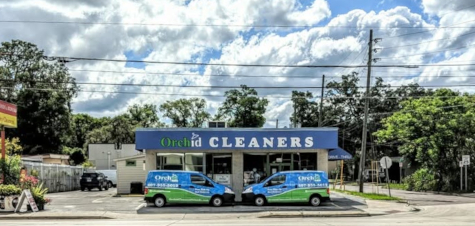
In most industries, growth means more space, but for Daniel Cha of Orchid Cleaners in Orlando, Florida, 2,400 square feet is enough to process over $3 million USD per year. Orchid operates four retail locations and a pickup-and-delivery service that has become one of the company’s fastest-growing divisions, reaching customers throughout Central Florida.
In this column, Daniel pulls back the curtain on how disciplined systems, continuous improvement, and smart use of technology have allowed Orchid Cleaners to thrive in a remarkably small footprint—and where he’s taking the business next.
From Hospitality to Dry Cleaning
How did you get into the dry-cleaning industry? Was Orchid Cleaners your family business?
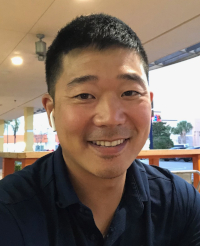
My parents owned a dry cleaning business throughout my childhood, but I wouldn’t say my path is the traditional second-generation story. It was the last thing my parents wanted for me, and quite honestly, the last thing I wanted for myself. I spent my early adult years working in hospitality, primarily in restaurants, but had an opportunity to purchase a drop store in 2011. Since I hadn’t pursued a “traditional” college path, I saw the business as an opportunity to build a long-term career and create something of my own.
It’s funny how things come full circle. I know you also had the opportunity to work with SMRT when it first began.
Yes, you’re right. A pivotal chapter in my career came later when I became an early customer of SMRT Systems. SMRT was still in its infancy, and I developed a friendship with Josh Nye and Bill Alber, SMRT’s co-founders. They invited me to join the company as an implementation specialist.
While running Orchid Cleaners full-time, I spent several years helping over 100 dry cleaners across North America transition to the SMRT platform. The experience gave me a front-row seat to some of the best operators in the industry and influenced how I think about leadership, customer experience, operations, and growth. Looking back, it was one of the most valuable educational experiences of my career.
So talk to me about what Orchid looks like today—what is the size of your current facility? What has growth looked like over the past several years?
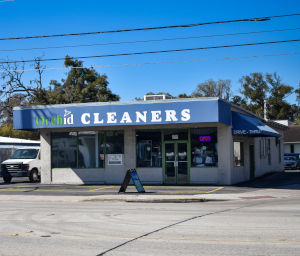
Our current production facility is roughly 2,400 square feet, and within that space, we’ve grown from approximately $700,000 in revenue in 2019 to a projected $3 million in 2026. We process roughly 6,000 garments per week, which is close to the practical capacity of the plant.
Our production operation runs Monday through Friday. We currently do not operate a formal night shift, but on occasion, our volume demands some weekend work. Could we process more? In theory, sure, but our commitment to quality always takes precedence over throughput. As customer expectations evolve, we believe premium quality and exceptional customer experience are increasingly important differentiators.
Building a Culture of Continuous Improvement
The growth you’ve experienced in the past five years is more than most businesses may experience in their lifetime. As you grew, did you bring in plant consultants, or did sales reps or mechanics help you maximize the use of your current space?
Our space evolved through collaboration within our team and years of continuous improvement. Growth has come from hundreds of small adjustments and lessons learned along the way.
We have a philosophy at Orchid: mistakes are not failures; they are opportunities to learn and improve. I often tell our team that “the current version of Orchid Cleaners should be the worst version of Orchid Cleaners.” The goal is to become incrementally better every day. Those small improvements compound over time.
It sounds like you have a very open team with a commitment to continuous improvement. Can you share more about your team and culture?
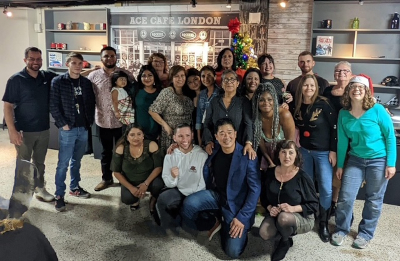
People are everything. I am fortunate to work alongside an exceptional team, and I would confidently put our staff up against anyone in the industry. We employ 32 team members across our organization, ranging from part-time college students to industry veterans. Culture is a significant part of our success.
However, great teams do not happen by accident. We’re built around our core values, which we summarize with the acronym CLEAN: Community, Loyalty, Excellence, Accountability, and Nobility. Building a strong culture requires intentional leadership, clear expectations, documented systems, and a shared vision.
Knowing When You’ve Outgrown the Space
Are you having to turn down business because of your limited capacity?
Occasionally, yes. We dislike turning away opportunities, but we are careful not to accept business that would compromise quality standards.
It’s clear you’ve done big things within a small footprint. I know you’re making the leap to build a bigger facility. What was the tipping point when you knew you had outgrown the space?
People describe expansion as a courageous decision, but it hasn’t felt that way to me. It’s one dictated by our reality. For us, the challenge was never simply about sales volume. Space constraints often manifest as increased labour costs, workflow inefficiencies, heat, and operational complexity before they show up in revenue figures.
One of the most frustrating aspects of operating in a constrained facility is seeing beautifully finished garments compromised by limited storage. A larger facility is not simply about accommodating more business; it is about creating an environment where quality, efficiency, and team experience can thrive simultaneously. Our current facility can continue operating, but doing so would place a ceiling on our ability to grow, improve, and better serve our community.
Quick Questions with Daniel Cha
Wishing you the best of luck with your new facility – I hope to visit in the future. Let’s close with a few rapid-fire questions.
What do you like to do in your spare time?
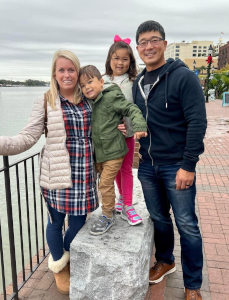
Spending time with my wife, Camielle, and our two children, Allison and Alexander. Outside of family, I’m a lifelong martial artist. I coach kickboxing and have trained Brazilian Jiu Jitsu for more than a decade.
One piece of advice you’d give to someone who is thinking of buying a dry cleaner?
Prepare to be baptized by fire. Dry cleaning can be an incredibly rewarding business, but it is not a passive investment.
Who’s been a mentor in your life?
My father had a profound impact on who I would eventually become as a business owner. Throughout my childhood, I witnessed his commitment and sacrifice. As I’ve gotten older, and especially as I’ve led my own business and family, I’ve come to recognize how much those examples shaped my values and work ethic.
Favourite thing about living in Florida?
Being less than an hour from the ocean almost anywhere I go. And if I’m being honest, the lack of state income tax doesn’t hurt either.
Where do you see the biggest growth opportunities in our industry?
There are opportunities everywhere. Wash and fold, pickup and delivery, B2B partnerships, restoration, and more. But the biggest opportunity is improving the customer experience.
We spend very little time worrying about what happens outside our four walls. Instead, we focus on looking inward and asking a simple question: “How can we be better today than we were yesterday?”
Related Posts


About The Author

Linley McConnell
Linley McConnell is the sales and marketing manager of Gibson's Cleaners in Toronto. She can be reached at linleym@gibsonscleaners.com. She writes on industry issues from a Third Generation perspective.