
Behind the Tech at Jensen

SERIES: BEHIND THE TECH

Today’s machines have computer screens, QR codes, buttons and lights, access panels for maintenance, and conveyor belts to move the load from Point A to Point B. Every machine also has a team of people behind it that brought it to life. Here are two of them.
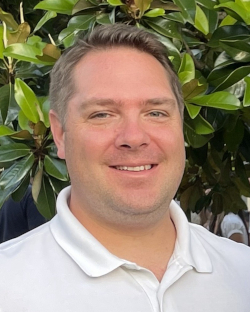
Robert Hennessy
Sales Support Manager
My role bridges technical design, coordination and customer-facing support. I develop 3-D system design layouts, ranging from full-plant workflow concepts to area-specific solutions such as wash aisles or finishing zones. I source quotes from third-party equipment vendors and freight forwarders, support the sales team through proposal development, and coordinate the tasking of our back-office engineering and sales support group. I also serve as the liaison for the Bay County Chamber of Commerce, which helps keep our business connected to the broader community.
In your role, what part of the laundry system do you focus on, and why?
I primarily focus on finishing equipment, automated material-handling systems, and third-party equipment integration. The finishing side is where a customer truly sees the value of their investment. It’s the final scorecard for the entire system, how well items were sorted, washed, dried, ironed, folded, stacked and ultimately presented. Because finishing captures the sum of all upstream processes, I take pride in supporting the part of the operation where quality becomes visible.
How did you first become interested in industrial laundry/automation/machinery design?
Before joining Jensen, I worked as a designer for a military contractor. Then one day, I received a call saying someone had found my résumé and believed I would be a strong fit for the laundry industry. I interviewed alongside several highly skilled candidates, and when I was chosen, it felt like a turning point. Like most outsiders, I had no idea the heavy-duty laundry industry existed, let alone how large, innovative, and technologically advanced it is. Once I stepped in, I quickly realized how much opportunity and complexity the industry holds, and how far ahead Jensen is from a technological standpoint.
Was there a ‘Eureka’ moment or formative experience that made you choose this field?
Yes, and it happened very early in my career with Jensen. I was visiting customer sites with the then-President and VP of Sales, getting a crash course in the industry. During one visit, we sat down with a customer who was understandably frustrated about the performance of a newly installed machine. I stayed quiet, expecting to simply observe. What I saw was something rare in any industry: true accountability. The leadership listened, took full ownership of the issue, and committed to making it right. No excuses, no deflection.
That moment told me everything I needed to know. I knew I had found a company worth building a long-term career with, and an industry where integrity still mattered.
What’s one engineering problem in laundry systems that still keeps you up at night (or wakes you early)?
A modern laundry facility draws on multiple engineering worlds: mechanical, architectural, industrial, systems, utilities and more. Each discipline has its own constraints and priorities. The challenge that keeps resurfacing is bringing all these disciplines together into one coherent, accurate and user-friendly design. The goal is to satisfy every technical requirement while presenting information in a way that customers can easily understand and make decisions from. It’s a big puzzle, but one that keeps the work rewarding.
What’s the most exciting recent technological advance or feature you’ve worked on? Which project or machine are you most proud to have been part of, and why?
I especially enjoy projects where new customers are entering the heavy-duty laundry industry for the first time. Helping them plan a facility from scratch is energizing. It’s a moment where you can educate, guide, and set them up for success. It’s also a chance to showcase not just the quality of Jensen’s equipment, but the strength of the team standing behind it. Watching a new operator gain confidence and excitement about what they’re building never gets old.
What emerging technologies are you most excited to integrate more deeply into future laundry systems?
I’m excited to see how Artificial Intelligence will shape data transfer, boost productivity, and refine best practices. I’m also looking forward to using digital twin simulations to bring plant planning into augmented reality. The idea of customers virtually walking through their future facility – understanding flow, space and interaction – before construction even begins. Feels like the next major leap in plant design.
Can you share a story of feedback from a customer (positive or negative) that changed how you approached the next design or how you do your job?
During a site survey in New England, I noticed that every morning the laundry owner placed fresh apples in bowls throughout the break room. By the end of the day, they were always gone. On my last day, I asked him why he did it. He told me that everyone who works in his facility is like family. He knows their names, their stories and their lives. The apples were his way of saying thank you. A small gesture to remind them they mattered. That moment stayed with me. It reshaped how I approach my work and the people around me. It reminded me that small, thoughtful gestures can make people feel valued in ways that spreadsheets and technical drawings never will.
What do you like to do when you’re not thinking about equipment?
Lately, I’ve stepped into a support role helping my youngest daughter start a coffee roasting business. Watching someone so young embrace entrepreneurship, and having the chance to help her build something she’s passionate about, has been one of the most rewarding experiences of my life.
Do you have a favourite piece of ‘laundry lore’ or an amusing anecdote from your time in the business?
During a site visit, I was leaning around a machine trying to hook my tape measure to a corner when I felt a sharp poke on my calf. I ignored it, until it happened again, this time like a Morse code message. I spun around to find a chicken pecking my leg. The facility doors had been left open for fresh air, and the chicken had wandered in like it worked there. It followed me for three hours. I joked that if it wasn’t going to help hold the tape measure, it could at least stop pecking me. Even now, the absurdity still makes me laugh.
If you could wave a magic wand and change one thing about the current state of industrial laundry systems, what would it be?
We’re in a period of major growth and generational turnover. If I had a magic wand, I would find a way to capture all the knowledge, experience and wisdom held by long-time industry veterans, and make it accessible, transferable and permanent for the next generation. If we could bottle that insight and hand it to the new leaders stepping in, it would strengthen the industry for decades.
—————————————————
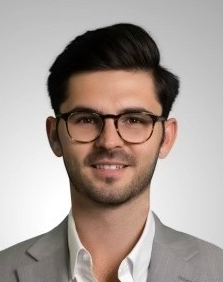
Hunter Wills
Midwest Regional Sales Manager.
Responsible for sales in 9 states in Midwest USA
In your role, what part of the laundry system do you focus on, and why?
Working for Jensen allows us to focus on the complete laundry process from start to finish. In regional sales we put a strong focus on flatwork technology and use Jensen’s resources to help us provide solutions for washroom and sorting processes.
How did you first become interested in industrial laundry/automation/machinery design?
I grew up with a father who was a laundry operator my entire life. Summer times were spent sorting linen at a young age, to running routes when I became old enough, to eventually running production operations.
Was there a ‘Eureka’ moment or formative experience that made you choose this field?
Post graduating college I began working full time while my father’s company’s new laundry was under construction. It was during this time that I realized how much I enjoyed the process of laying out the equipment in the building, and seeing how much one area of the process affected everything downstream.
What’s one engineering problem in laundry systems that still keeps you up at night (or wakes you early)?
At this very moment I would say the one thing that I have spent the most time thinking about how we can improve, would be the process of automatically feeding small pieces. Often the small-piece ironer line accounts for the most amount of FTEs (Full-Time Equivalents in labour) on the front of an ironer. The return on investment would be amazing if we could engineer an automated small-piece feeder.
What’s the most exciting recent technological advance or feature you’ve worked on? Which project or machine are you most proud to have been part of, and why?
Recently I was lucky enough to be a part of a project with an automated sorting system for garments and retail medical linens. The system uses both RFID and camera to identify each article and sort it correctly. I think that anytime I am able to help a small up-and-coming laundry grow their business through a new equipment purchase is always a proud moment.
What emerging technologies are you most excited to integrate more deeply into future laundry systems?
Without a doubt robotics are already playing a large part into how we design laundries moving forward. The further integration of complete automated sorting, along with automatic towel feeders, is already making its way into our drawings. These robotics will allow our customers to process more linen along with benefiting the accuracy of their sorting and washing, while decreasing the risks and workload of employees.
Can you share a story of feedback from a customer (positive or negative) that changed how you approached the next design or how you do your job?
I believe that there is always something to learn from every project. I recently worked on a project where they gathered the opinions of their operators to see how this new system would play into their daily tasks. I felt that was a very important step in the process, as getting the buy-in from your operators on a new system is extremely beneficial to the overall efficiency of the project once it is in place. While it was hugely beneficial to them, I think it was a crucial moment for myself to always remember and ask how each project will affect the daily operator.
What do you like to do when you’re not thinking about equipment?
I have three pets at home that all have very unique personalities and are always waiting at the door after I have been away. Over the past few years I have become a very big Formula 1 fan and I try not to miss a race during the season.
Do you have a favourite piece of ‘laundry lore’ or an amusing anecdote from your time in the business?
As a whole we have a very tight-knit industry and I think the one thing that I always enjoy seeing is the connection between so many customers and how so many of our paths intersect with each other. It seems that everyone always has a story about their encounter with each other in the past.
If you could wave a magic wand and change one thing about the current state of industrial laundry systems, what would it be?
I think the one thing that I would change would be to embrace the technology that is already here. The technology that is present is not to completely replace people, but to shift them into areas that are not as physically demanding or strenuous. These technologies will help everyone – from the operator on the floor to the production manager – by sending better data to the owner and thus increase revenue.
Related Posts


About The Author

Editor, Fabricare Canada magazine
Becca Anderson spent 17 years in public relations, advertising and corporate PR before joining Fabricare Canada in 2000. She was named editor in 2013, and welcomes feedback about the magazine via the contact form on this site.